Plastic boards wear out invisibly. A new polyethylene board is smooth and easy to sanitise. After a few months of real use it is covered in thousands of fine cuts, and each of those cuts is a channel that holds moisture and protein. Scrubbing pushes residue further in rather than lifting it out. Worse, every one of those cuts represents a tiny amount of plastic that has left the board — and it has not evaporated. Households that go through a plastic board every year or two are effectively running a slow-motion consumable in the place where their food is prepared.
Wooden and bamboo boards demand maintenance. A good wooden board is a genuinely lovely object, but it is also a commitment. It should never go in the dishwasher. It wants oiling every few weeks with food-grade mineral oil. It stains from turmeric and beetroot. It absorbs the smell of garlic, fish and onion and slowly hands those smells back to whatever you chop next. Bamboo, which is harder and cheaper, is assembled from glued strips, and heat plus water eventually finds the glue line. That split down the middle is not a cosmetic issue; it is an unreachable cavity in the surface you cut food on.
Glass boards protect hygiene and destroy knives. Tempered glass is non-porous, which solves one problem while creating another. Glass is far harder than a knife edge, so every cut microscopically rolls or chips the blade. It is also loud and slippery. People who buy glass boards tend to use them as trivets within a month.
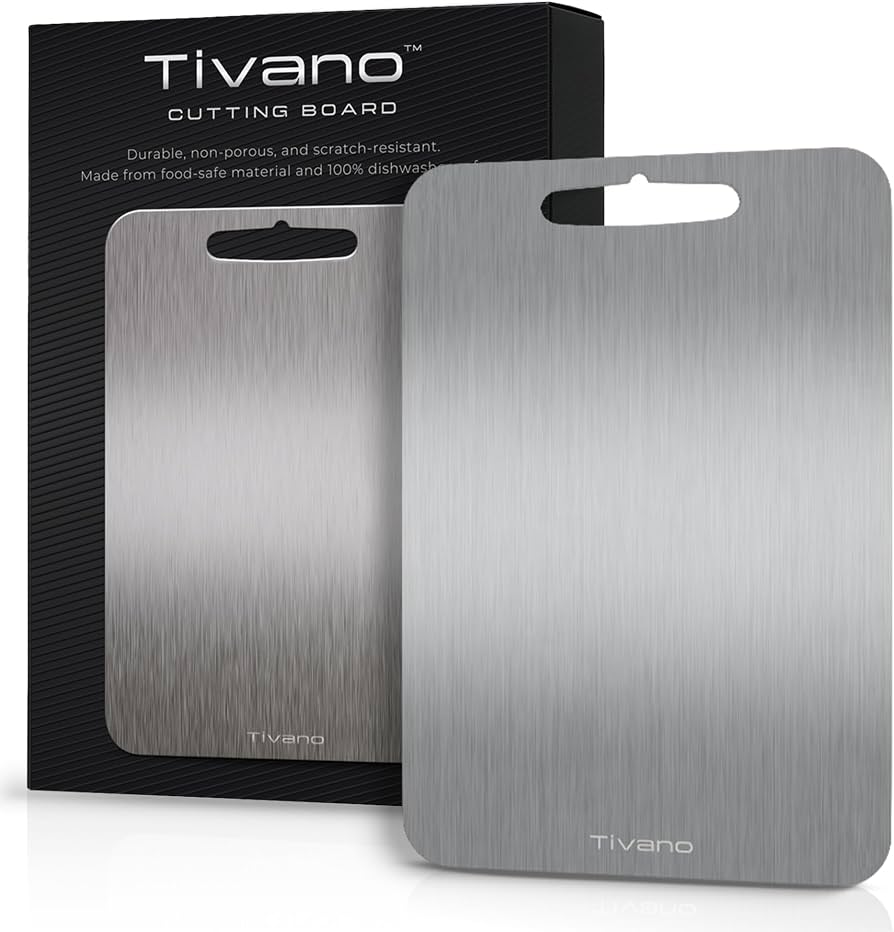
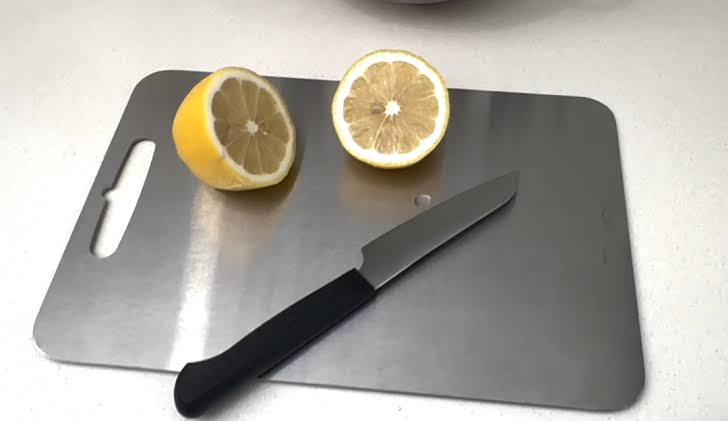
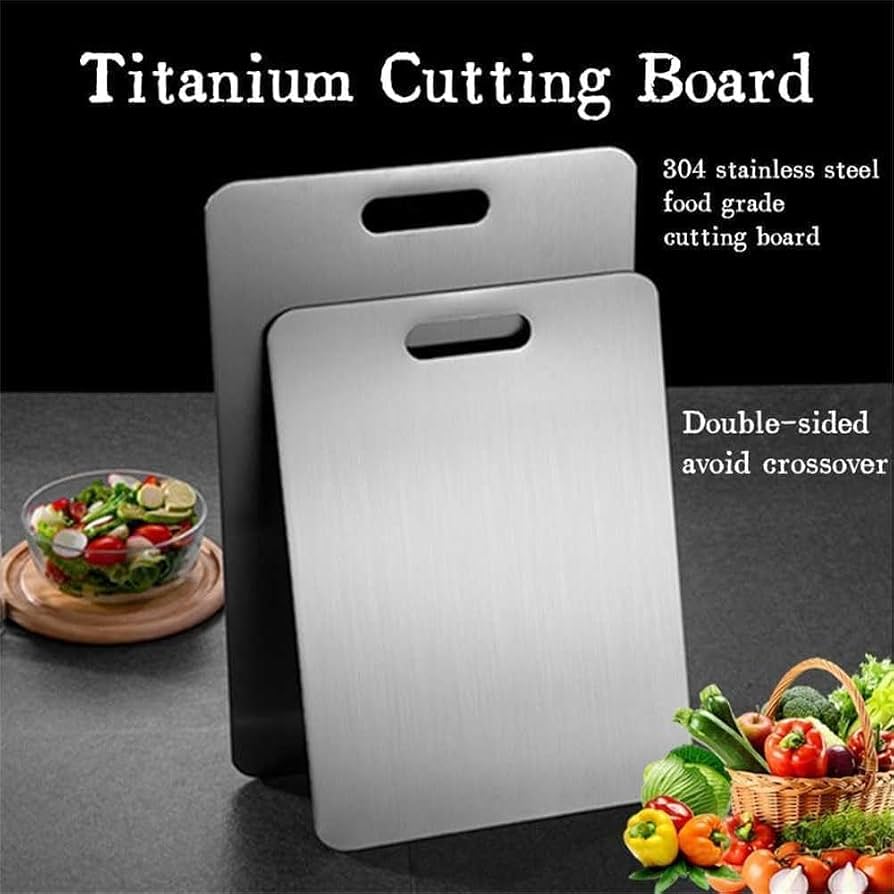
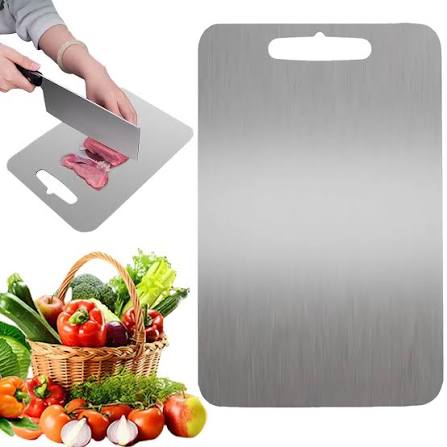
Stainless steel sits in the gap none of those materials cover: non-porous like glass, durable like nothing else, maintenance-free unlike wood, and kind enough to a blade that you can genuinely cook on it every day.